



Martin Indiana
$685.00
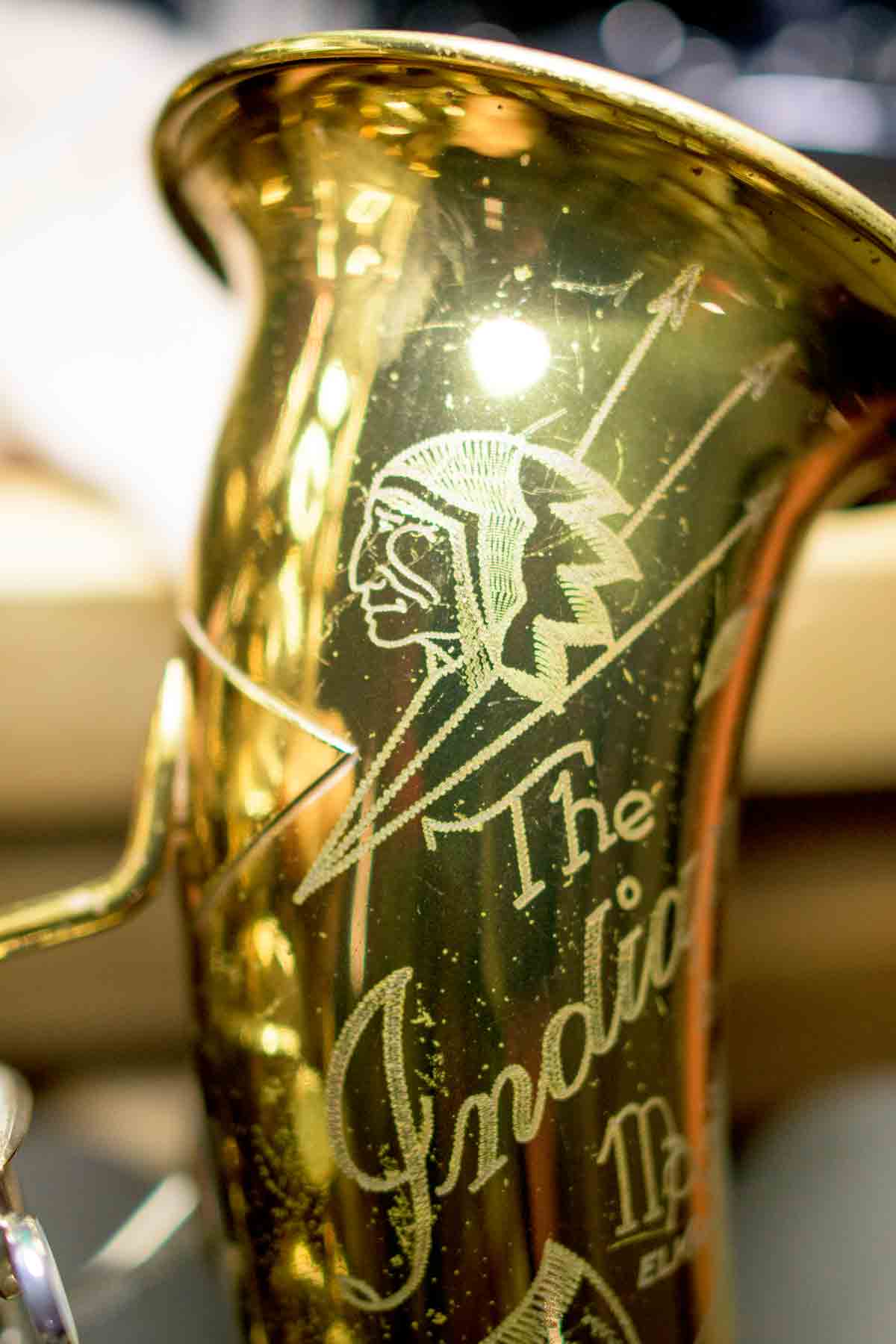
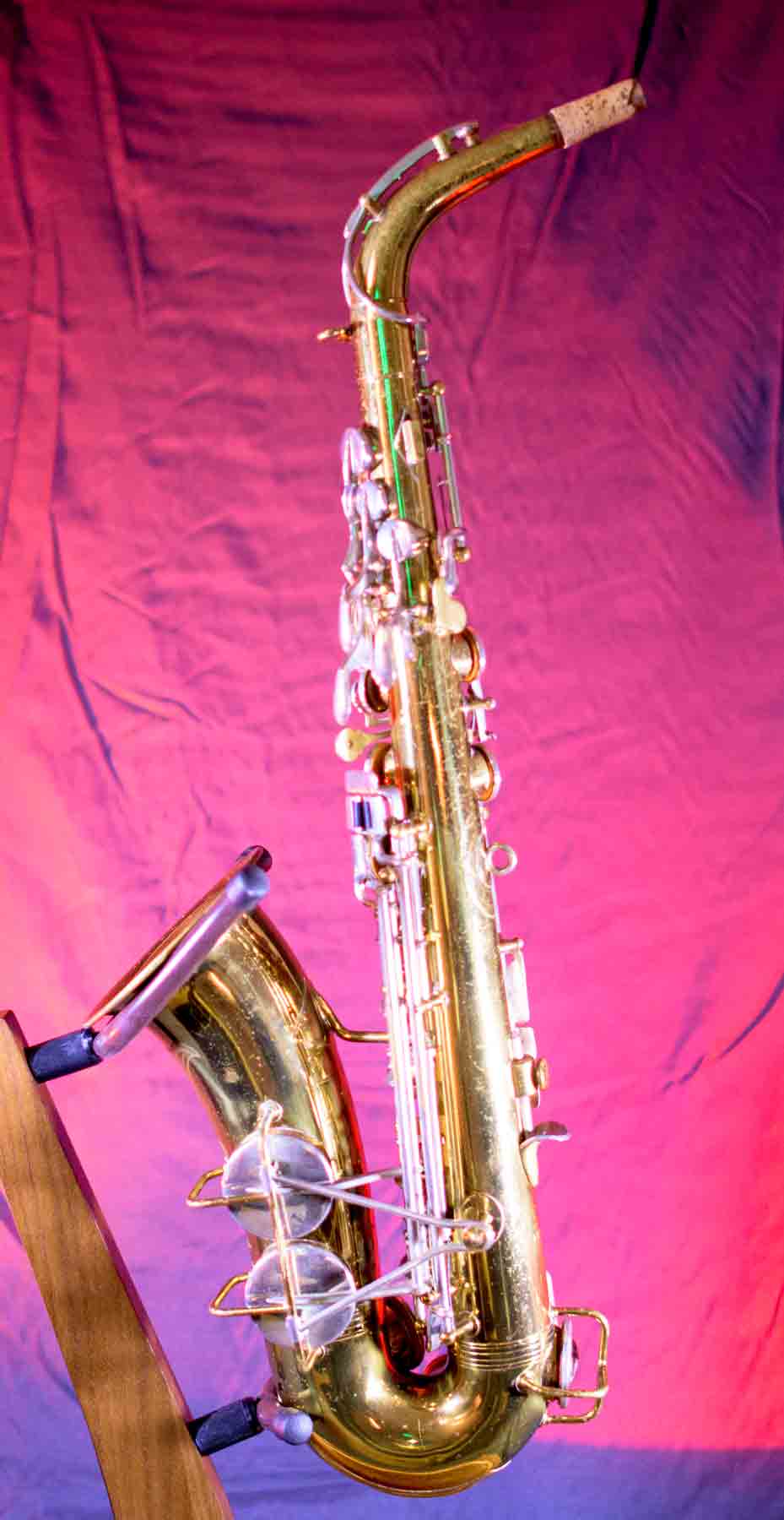
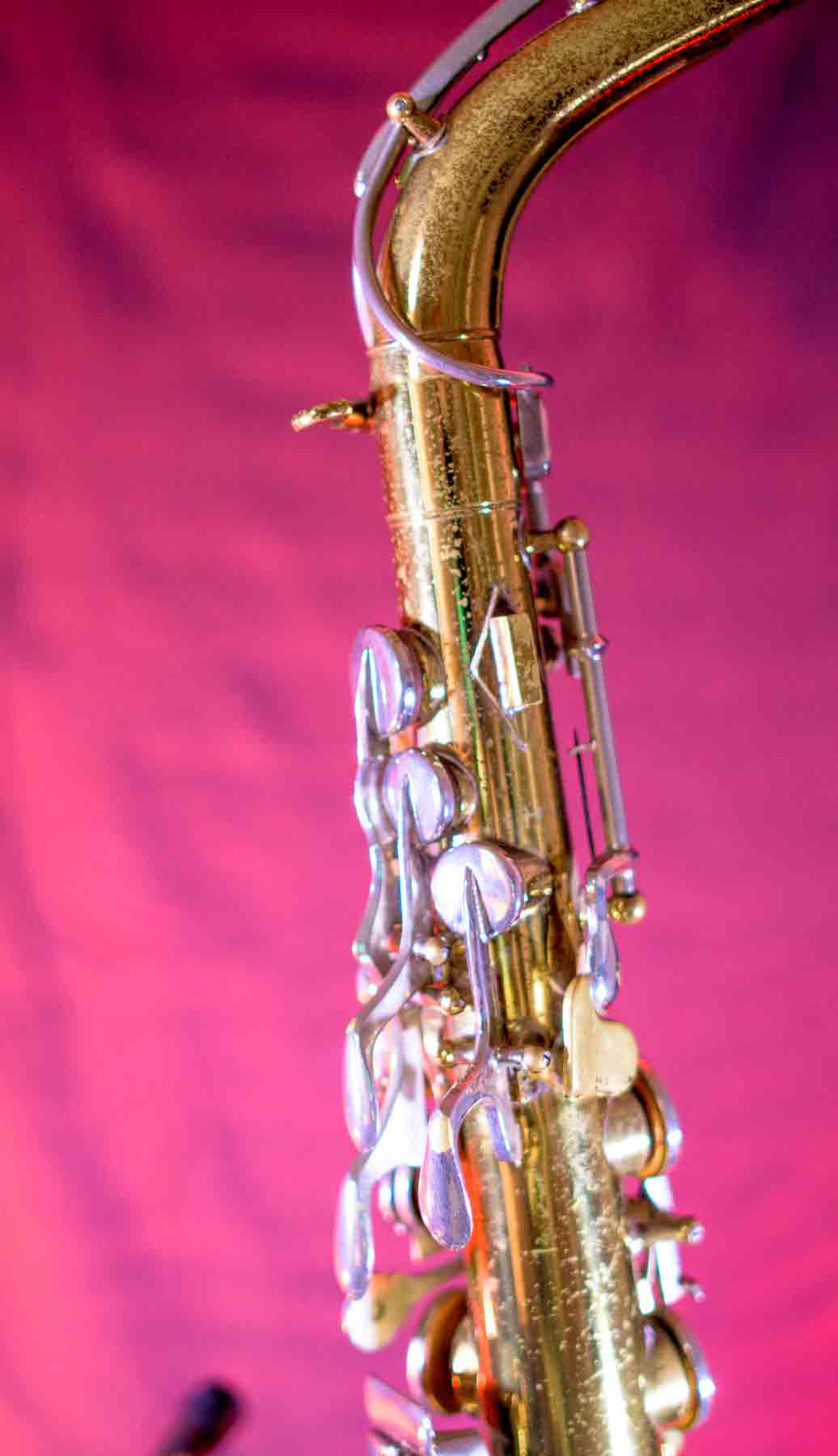
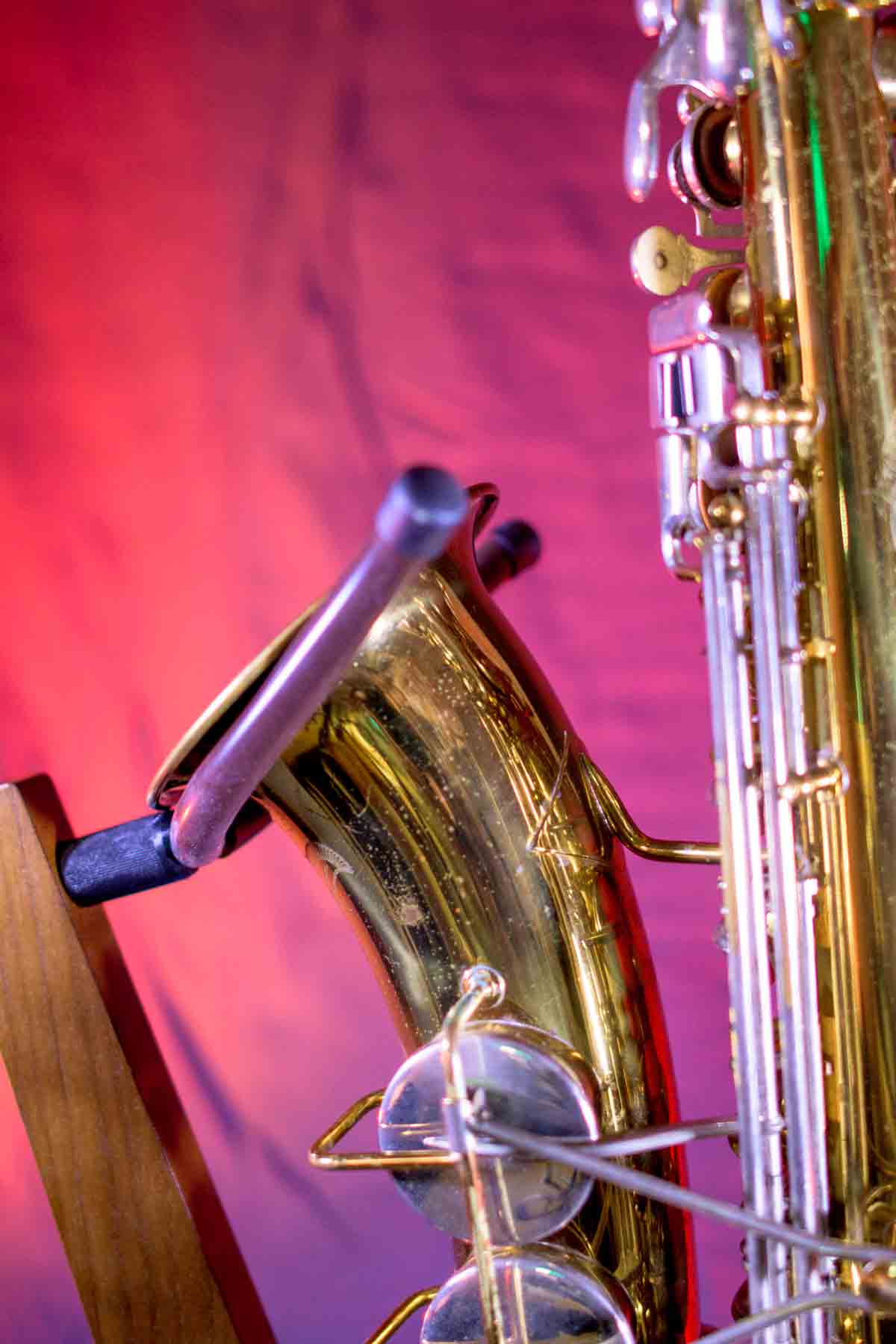
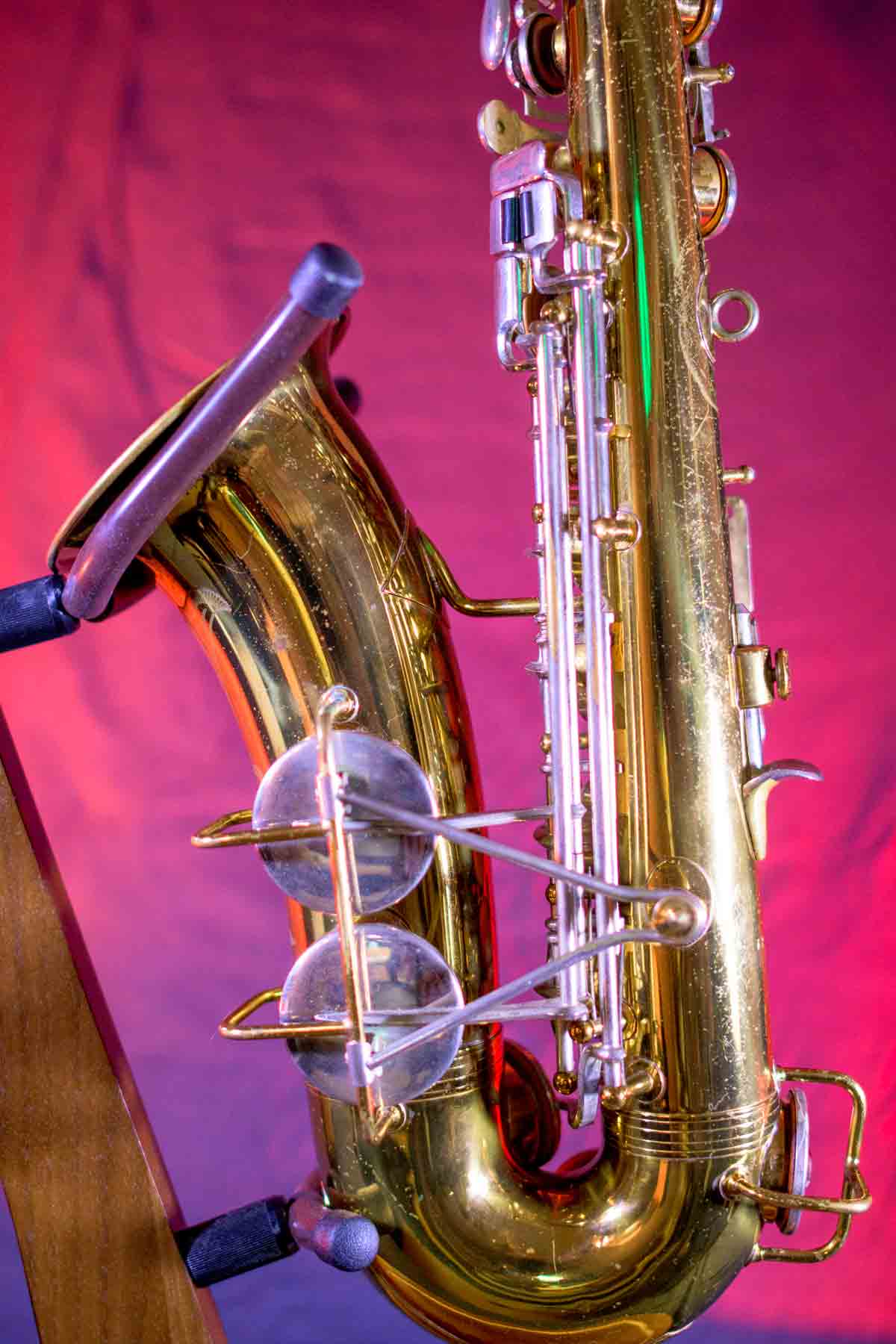
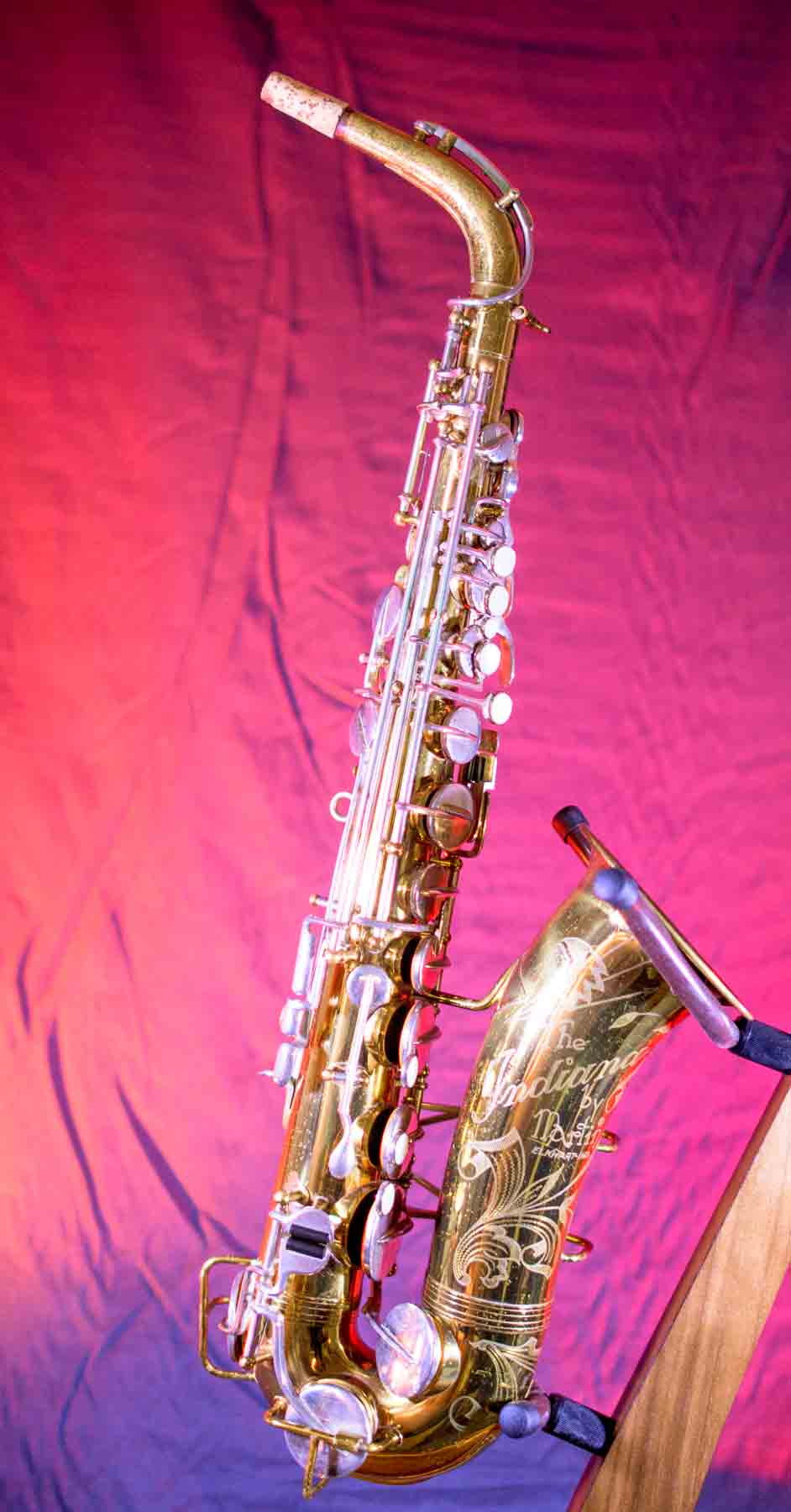
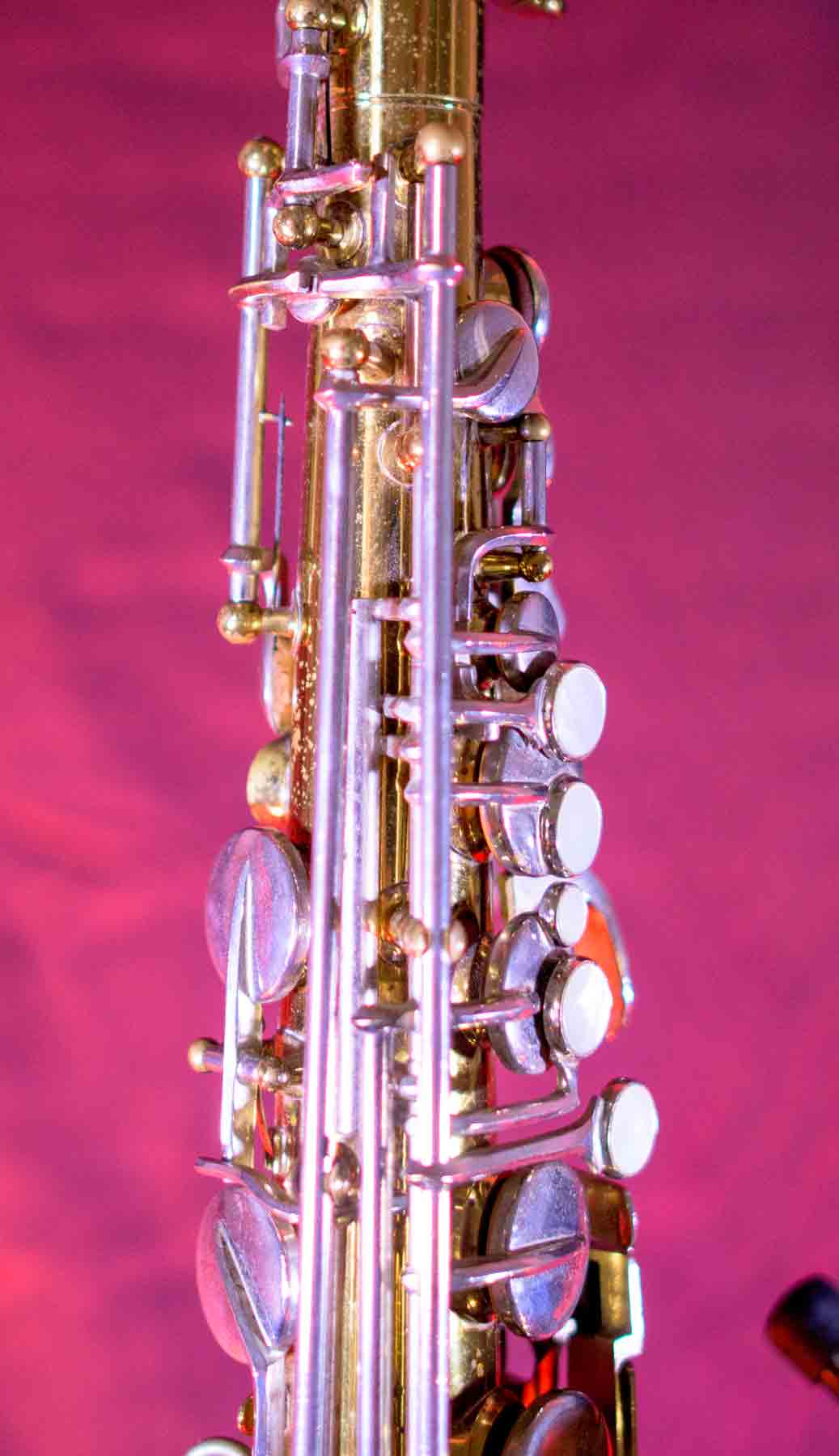
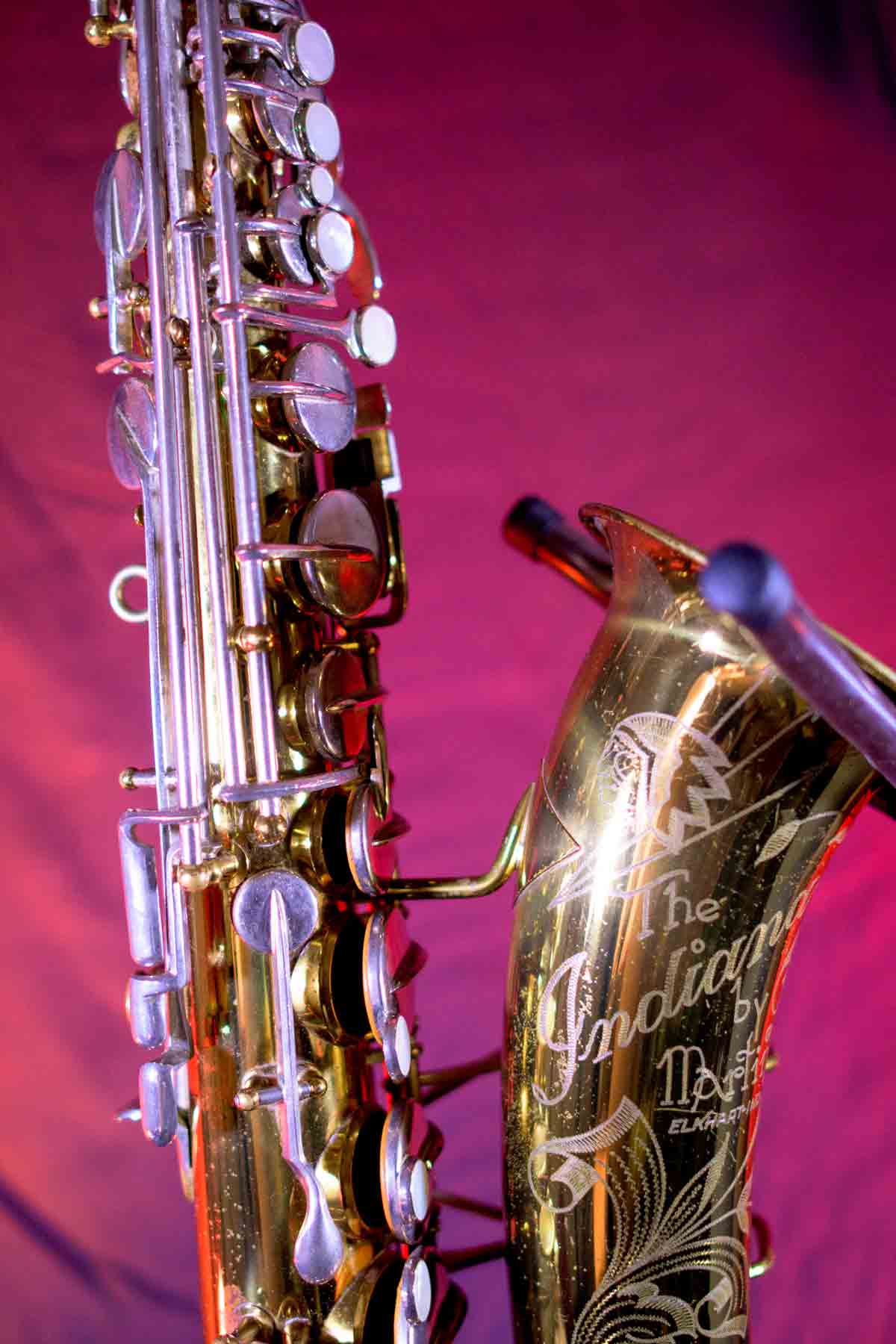
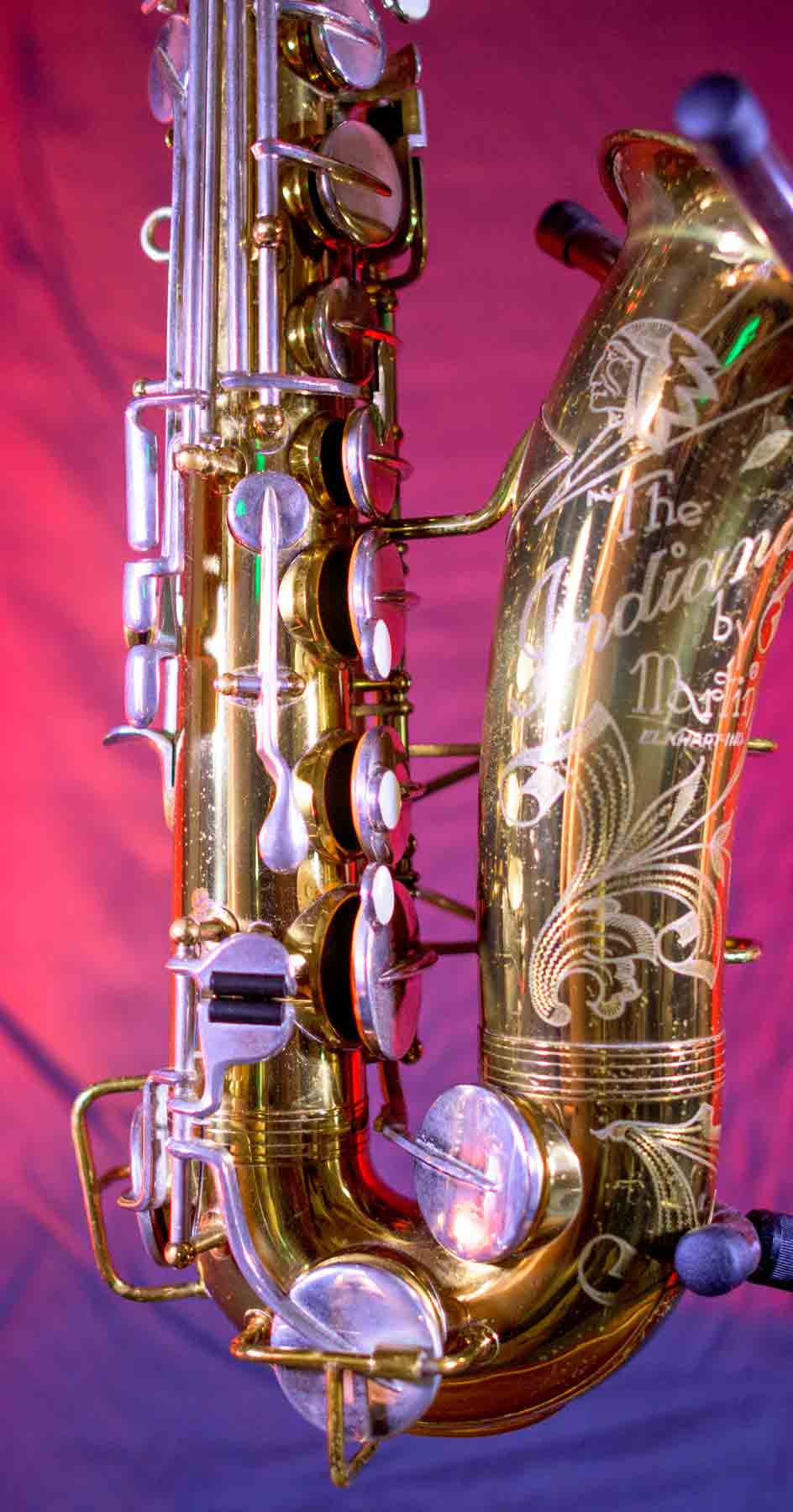
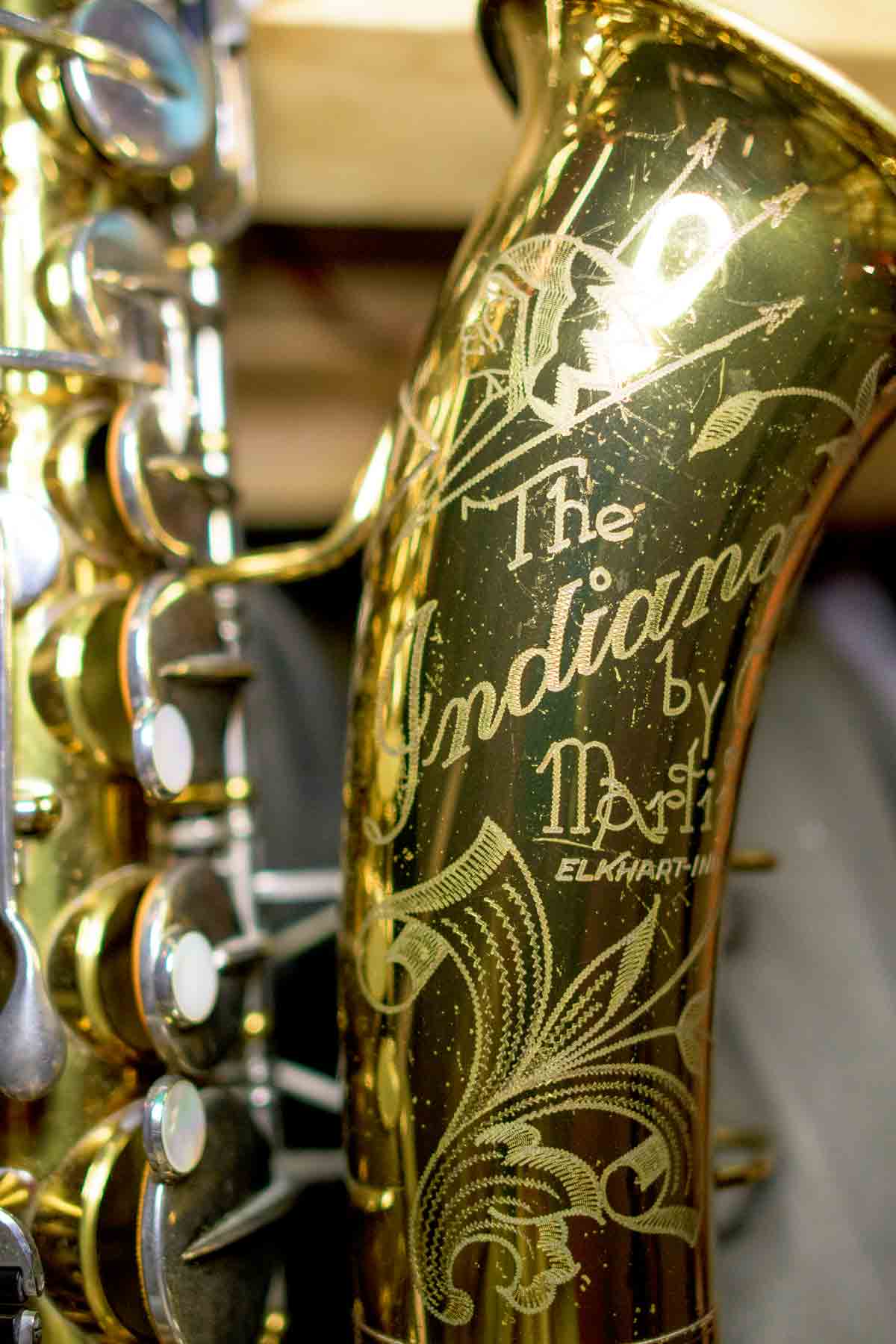
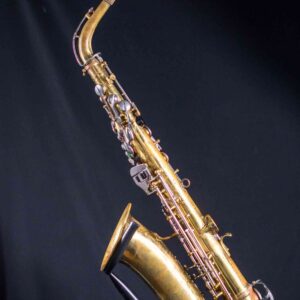
This 1959 Martin Indiana Deluxe is a true collector’s find, featuring the iconic heart-shaped left-hand thumb rest and an adjustable right-hand hook. This particular model is the most desirable version of the Indiana line, preserved in stunning condition with its original, lustrous lacquer and intricate engraving.
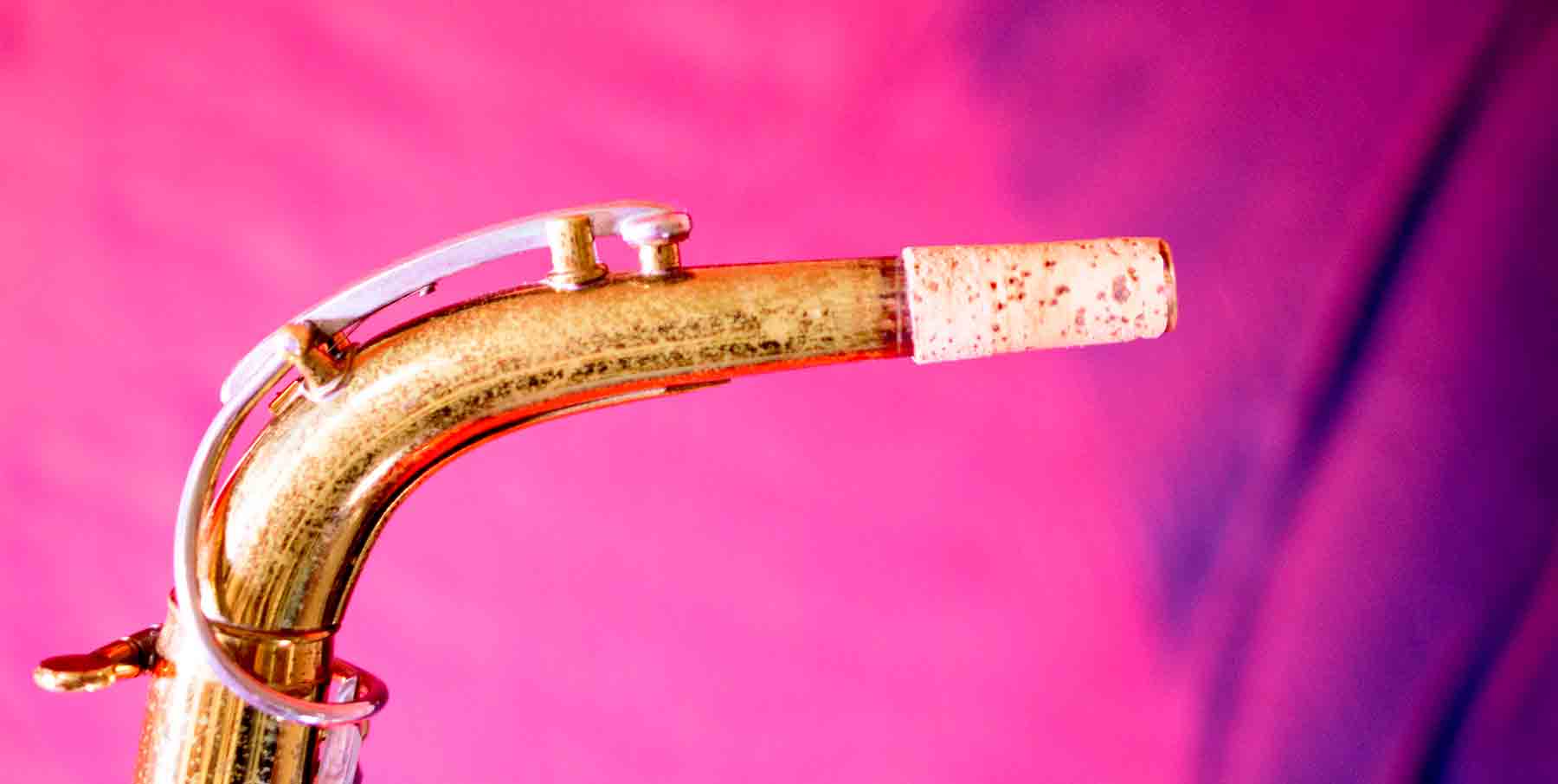
Freshly serviced and playing like a brand-new instrument, this horn is as much a joy to perform with as it is to look at. It comes complete with a high-quality vintage hard case, a Bundy II mouthpiece, and a ligature.
Key Features
Details on the unique hardware and aesthetic of this 1959 model.
- Model: Martin Indiana Deluxe (1959).
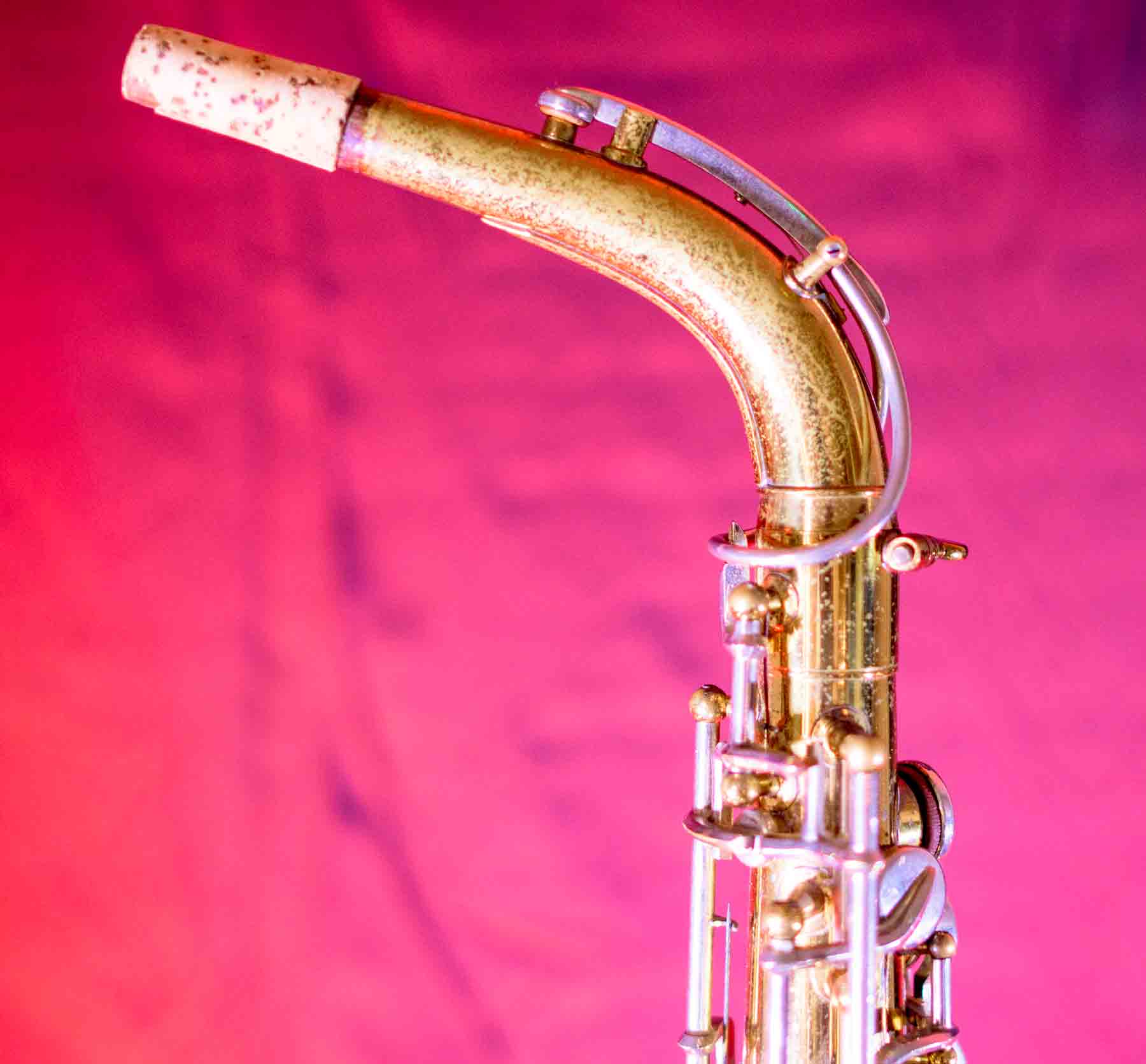
- Ergonomics: Signature heart-shaped thumb rest and adjustable right-hand thumb hook.
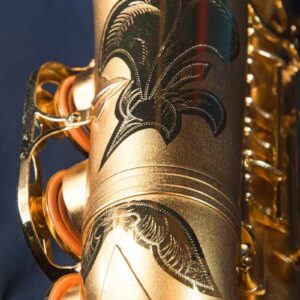
- Aesthetics: Mostly intact original lacquer with elaborate, shiny engraving.
- Condition: Recently serviced; plays with the response and reliability of a new horn.
1 in stock
Description
The Martin Indiana is a vintage alto saxophone produced by the Martin Band Instrument Company in Elkhart, Indiana, between roughly 1942 and 1962. Often called a “sleeper” or the “poor man’s Martin,” it was marketed as a student-to-intermediate model but shares many high-end construction features with Martin’s professional “The Martin” (Committee III) line.
Key Features & Design
The Indiana is renowned for its robust build and “fat, lush” American vintage sound.
- Soldered Tone Holes: Unlike most saxophones with drawn tone holes, the Indiana features thick, soldered-on tone hole chimneys that are beveled at the top for better pad seating and stability.
- Adjustable Thumb Rest: It includes an early version of an adjustable thumb hook, allowing for more ergonomic hand positioning.
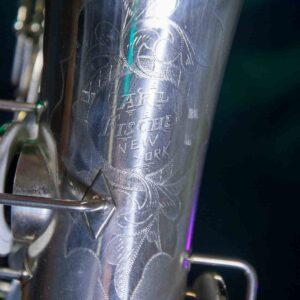
- Bell Engraving: Most models feature a distinct engraving of an American Indian with arrows or a “crisp Indian head” on the bell.
- Keywork: Earlier “Phase 1” models often feature a heart-shaped left thumb rest and nickel-silver keys, which players describe as feeling solid and responsive.
Used Market & Pricing
Because they were produced as second-line instruments, they are often available at a lower price point than professional vintage horns while offering similar tonal qualities.
Serial Numbers & Production Phases
Serial numbers for the Indiana model generally range from 26,000 to 96,000.
- Phase 1 (1942–late 1940s): Often based on the earlier Handcraft Committee design; typically features nickel keys and a heart-shaped thumb rest.
- Phase 2/3 (1950s–1962): Design shifted closer to “The Martin” professional line, often featuring gold-lacquered keys and different guard styles.
Pros & Cons
- Pros: Exceptional tone, high-quality “USA metal,” and a more affordable price than professional vintage equivalents.
- Cons: Notorious for “lacquer cancer” (poor finish durability) and older ergonomics, such as a non-articulated C# key, which may feel stiff compared to modern instruments.
Condition
We rate each horn’s condition. Any defects are noted here. Each criteria is on a scale of 1-10, with 1 being poor condition and 10 being perfect.
- Body (dents, deep scratches, etc.) – 10
- Finish (lacquer, silver plate, paint, etc.) – 9 – Original lacquer
- Previous repairs (soldered posts, dent work, etc.) – 10 none noted
- Accessories (case, mouthpiece, etc.) – 10 very nice heavy duty case.
- Playability (leaks, sticky keys, etc.) – 10


 Lamonte Alto
Reviews
There are no reviews yet.